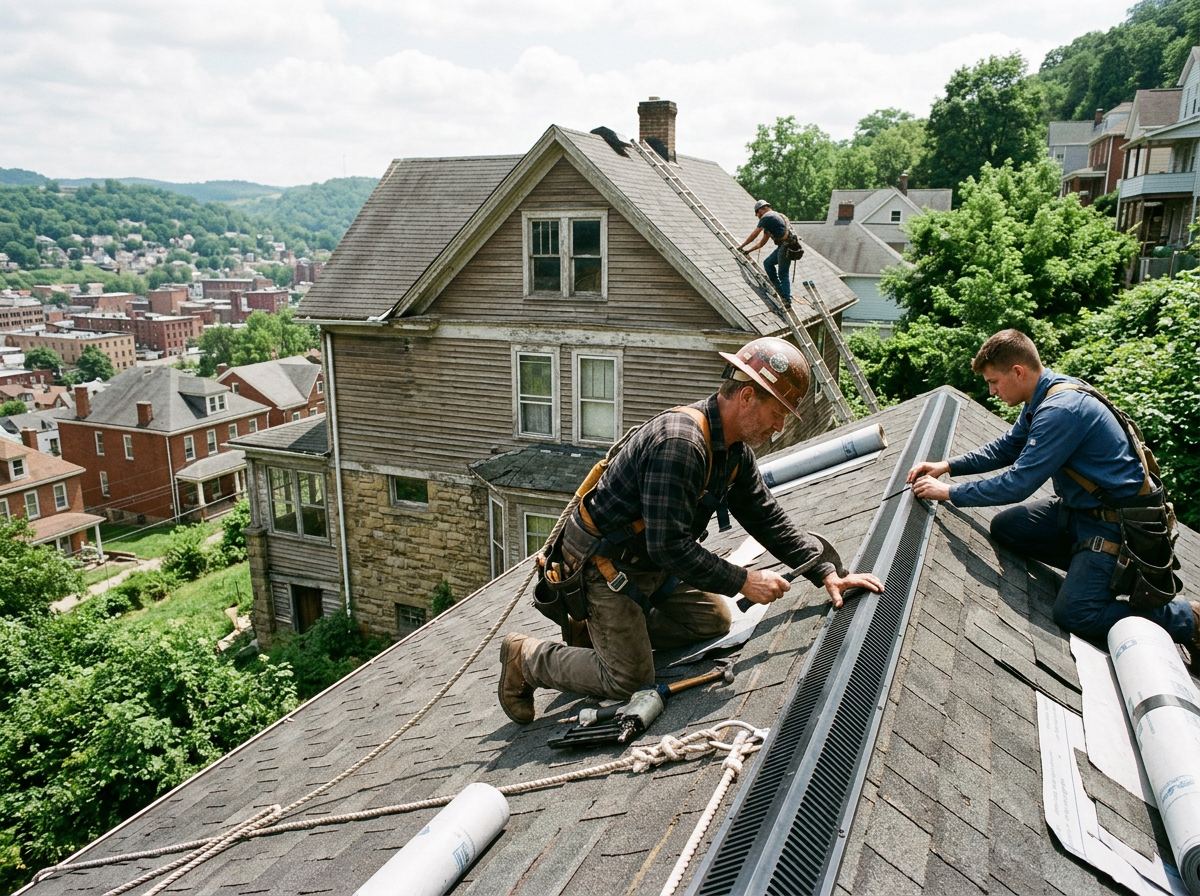
Johnstown sits in a deep valley where heavy Laurel Highlands snow loads meet steep hillside roofs on steel-mill-era frame houses in neighborhoods like Moxham, Kernville, Westmont and Cambria City. Freeze-thaw cycles and ridge-top winds push snow and ice into eaves and valleys, while limited original attic ventilation allows warm air to melt snow from below and create dams that force water under shingles. Older plank decking and multiple layers of roofing compound the problem because air cannot move freely from soffits to ridge.
Our crews begin every job with an attic inspection that checks existing soffit intake vents, ridge openings, insulation levels and signs of moisture on plank decking. We climb the steep pitches common to these homes and examine chimney flashing, valleys and any flat sections over additions for blocked or missing vents. From the exterior we note wind exposure on ridge lines and confirm whether the home sits on a narrow street lot in Downtown Johnstown or a more open site in Richland Township.
Work focuses on restoring proper airflow by cutting in continuous ridge vents, adding or enlarging soffit intake vents and installing baffles to keep insulation from blocking the path. On homes with plank decking we re-sheet sections with OSB where needed before new underlayment and shingles go down. The goal is balanced intake and exhaust that reduces attic heat buildup and stops ice from forming at the eaves during repeated winter storms.
Technician insight
In Johnstown the thing that catches most people out with roof ventilation is the plank decking on 1900-1940 homes in Moxham and Kernville. Homeowners add a ridge vent but leave the soffits closed or blocked by insulation, so air never moves and ice dams keep forming at the eaves during the first big snow.
Westmont Home Ice Dam Prevention
A steep-pitch slate-to-shingle roof on a narrow Westmont street showed repeated ice dam leaks at the valleys after heavy snow. We found closed soffits and no ridge opening on the plank deck. Our crews added continuous ridge vent, opened soffit intake sections and re-sheeted blocked deck areas so air could flow the full rafter length.
Roof Ventilation Services We Offer
✓Ridge Vent Installation
We cut continuous ridge vents along the peak to release hot air and moisture that otherwise melts snow from below and feeds ice dams on steep Laurel Highlands roofs.
✓Soffit Intake Venting
New or enlarged soffit vents pull cold air in at the eaves so air can travel the full length of the rafters before exiting at the ridge.
✓Attic Ventilation Balance Assessment
We measure existing intake and exhaust openings on older Johnstown homes to identify shortfalls that allow ice dams to form during heavy snow winters.
✓Ice Dam Mitigation Vents
Targeted vent additions at valleys and eaves reduce the temperature differential that causes water to back up under shingles on tight-access hillside lots.
✓Plank Decking Ventilation Upgrades
Where original board decking restricts airflow we re-sheet sections and add vents so air can move freely without trapping moisture against the wood.
How it works
- 1
Attic and Roof Inspection
We enter the attic and walk the exterior to check current venting, insulation, deck condition and ice-dam locations on the specific pitch and exposure.
- 2
Ventilation Plan
We calculate required intake and exhaust openings based on roof size, existing layers and the home's location on a sheltered valley lot or windy ridge.
- 3
Installation Work
Our crews cut ridge vents, enlarge or add soffit vents, install baffles and re-sheet plank decking where airflow is blocked.
- 4
Final Airflow Check
We verify continuous airflow from soffit to ridge and confirm no new openings were left vulnerable to wind-driven snow.